
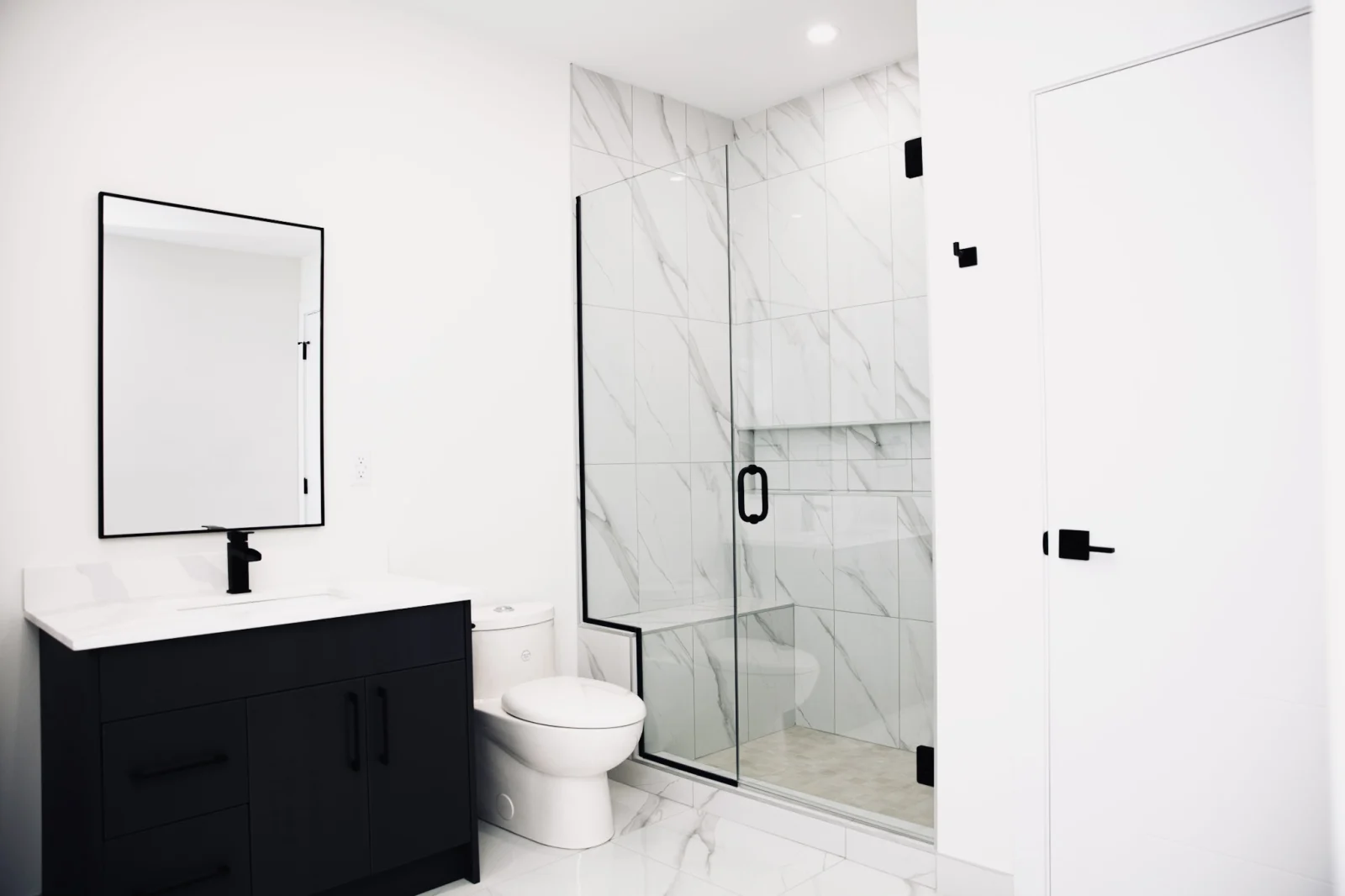
Bathroom renovation timeline: what happens week by week
A typical bathroom renovation timeline has two parts: planning before anyone picks up a tool, and the construction itself, which HomeStars' Canadian renovation cost guide says typically takes two to four weeks. The planning stage (design, selections, ordering and permits) often takes longer than the build, and it is what decides whether the construction weeks run smoothly. Inside those weeks, the order is fairly consistent: demolition, rough-ins and inspections, waterproofing, tile, then fixtures, glass and finishing. This guide walks through each stage, what you will see happening, and what can stretch the schedule.
Before construction: planning, selections and permits
This is the stage most homeowners underestimate, and it is where a good schedule is made.
- Consultation and assessment. Someone looks at the room in person: the layout, plumbing, ventilation, electrical and any signs of water damage.
- Design and layout. Deciding whether fixtures stay where they are or move, the shower type, storage and lighting. Moving plumbing changes both cost and schedule.
- Selections. Tile, vanity, fixtures, lighting, glass and accessories. Every item should be chosen before demolition, because a decision made mid-project is a delay.
- Ordering. Special-order tile, custom vanities and some fixtures have lead times. Ideally everything is on site, or has a confirmed delivery date, before the room is taken apart.
- Permits. New plumbing, new circuits and new bathrooms need permits, which must be in place before work starts. Our post on whether you need a permit to renovate in Edmonton explains the rules.
Our interior design and selections work happens in this stage, so that the construction weeks are spent building rather than deciding.
Week 1: protection, demolition and discovery
The first days are about protecting the rest of the home and opening up the room.
- Floors and the path to the bathroom are protected, and dust control is set up.
- Water is shut off to the room, and fixtures, vanity, tile and drywall come out as needed.
- The room is inspected once it is open. This is when hidden problems show up: water damage behind the shower, a soft subfloor, old plumbing or wiring that needs replacing.
Discovery is the main reason bathroom timelines change. If something is found, the right move is to fix it now, while the room is open. Our article on what happens behind the tile explains the common culprits.
Week 1 to 2: framing, rough-ins and inspections
With the room open, the trades rough in everything that will be hidden in the walls and floor:
- Framing for a new shower, niche, bench or changed wall, plus blocking for grab bars, the vanity and the glass.
- Plumbing rough-in for drains, supply lines and the shower valve.
- Electrical rough-in for lighting, outlets, the fan and any heated floor circuit.
- Ventilation, with the fan ducted to the outside.
Permitted work is inspected at this stage, before the walls are closed. The City of Edmonton's plumbing permit page warns that missing a required inspection may mean removing finished walls, extra inspection costs and delays. Booking inspections at the right time is one of the quiet parts of keeping a schedule on track.
Week 2: walls, floor preparation and waterproofing
- New board goes up on the walls, with moisture-resistant products in wet areas.
- The subfloor is prepared, and if you have chosen heated floors, the heating mat or cable is laid and tested. Our guide to heated bathroom floor costs covers the options.
- The shower is waterproofed: the pan or base, the walls and the transitions.
Waterproofing is the most important step in the whole project, and it is not one to rush. Products have curing times set by their manufacturers, and the shower should be tested before tile goes on. A day spent here protects the rest of the house for years.
Week 2 to 3: tile
Tile is usually the longest single stage in a bathroom. Floor, shower walls, niches and any feature wall are set, then grouted once the adhesive has cured. Large-format tile, patterns, mitred edges and floor-to-ceiling tile all take more time than standard tile in a simple layout, so the tile you choose affects the schedule as well as the budget.
Custom shower glass is generally measured once the tile is finished, because it has to fit the finished surfaces exactly. That means glass has its own lead time near the end of the project, and a shower may be usable before the glass is installed.
Week 3 to 4: fixtures, finishing and the final walkthrough
- Painting.
- Vanity and countertop installation, then the sink, taps, toilet and shower trim.
- Lighting, mirror, fan and any heated floor thermostat are connected.
- Accessories: towel bars, hooks, toilet paper holder.
- Glass installation once it arrives.
- Final inspections where permits require them, then cleaning and a walkthrough.
HomeStars' Edmonton bathroom cost guide notes that the steps in a bathroom renovation can overlap, and that a renovator can give you a customised timeline. In practice, good scheduling is what lets trades follow each other closely without waiting.
What makes a bathroom renovation take longer
- Decisions made late. Changing tile or fixtures after demolition usually means waiting for new orders.
- Hidden damage. Rot, mould or failing plumbing found during demolition adds repair time.
- Layout changes. Moving the toilet or shower drain adds plumbing work and sometimes structural work.
- Complex tile. Large or patterned tile, and full-height tile, take longer to set.
- Lead times. Custom glass, custom vanities and special-order items.
- Inspections. Work cannot be closed up until the inspection is passed.
- Combined projects. A bathroom done alongside a kitchen renovation, a basement development or a full home renovation follows the larger project's schedule.
Living at home during a bathroom renovation
If the bathroom being renovated is your only one, plan for how you will manage for those weeks, whether that is a gym membership, family nearby or staying elsewhere for part of the time. In homes with a second bathroom, most families stay put. Our survival guide to living through a renovation covers dust, noise and routines in more detail.
At Solenne, we do not quote a standard bathroom timeline, because it depends on your room and your selections. We give you a schedule with your quote after an in-person estimate, and our operations assistant Aliya Logun coordinates the trades and scheduling once work begins. You can see a finished example in our Windermere ensuite project, and our guide to bathroom renovation costs in Edmonton explains how scope affects budget.
Frequently asked questions
How long does a bathroom renovation take?
HomeStars' Canadian renovation guide says a bathroom renovation typically takes two to four weeks. Planning, selections, ordering and permits happen before that and can take longer than the construction itself.
What is the longest part of a bathroom renovation?
Planning and ordering usually take the most calendar time. During construction, tile tends to be the longest stage, especially with large-format or patterned tile.
Why does the shower glass come last?
Custom glass is generally measured after the tile is finished so it fits the final surfaces, and it is then made to order. That is why glass is often one of the last items installed.
Can a bathroom renovation be done faster?
The most effective way to shorten it is to make every selection and confirm every order before demolition, and to keep the existing layout where possible. Rushing waterproofing or tile curing is not a good way to save time.
Plan your bathroom schedule
If you are planning a bathroom or ensuite in Sherwood Park, Edmonton or the surrounding area, book a consultation and we will walk through the room, the selections and a realistic schedule for your project.