
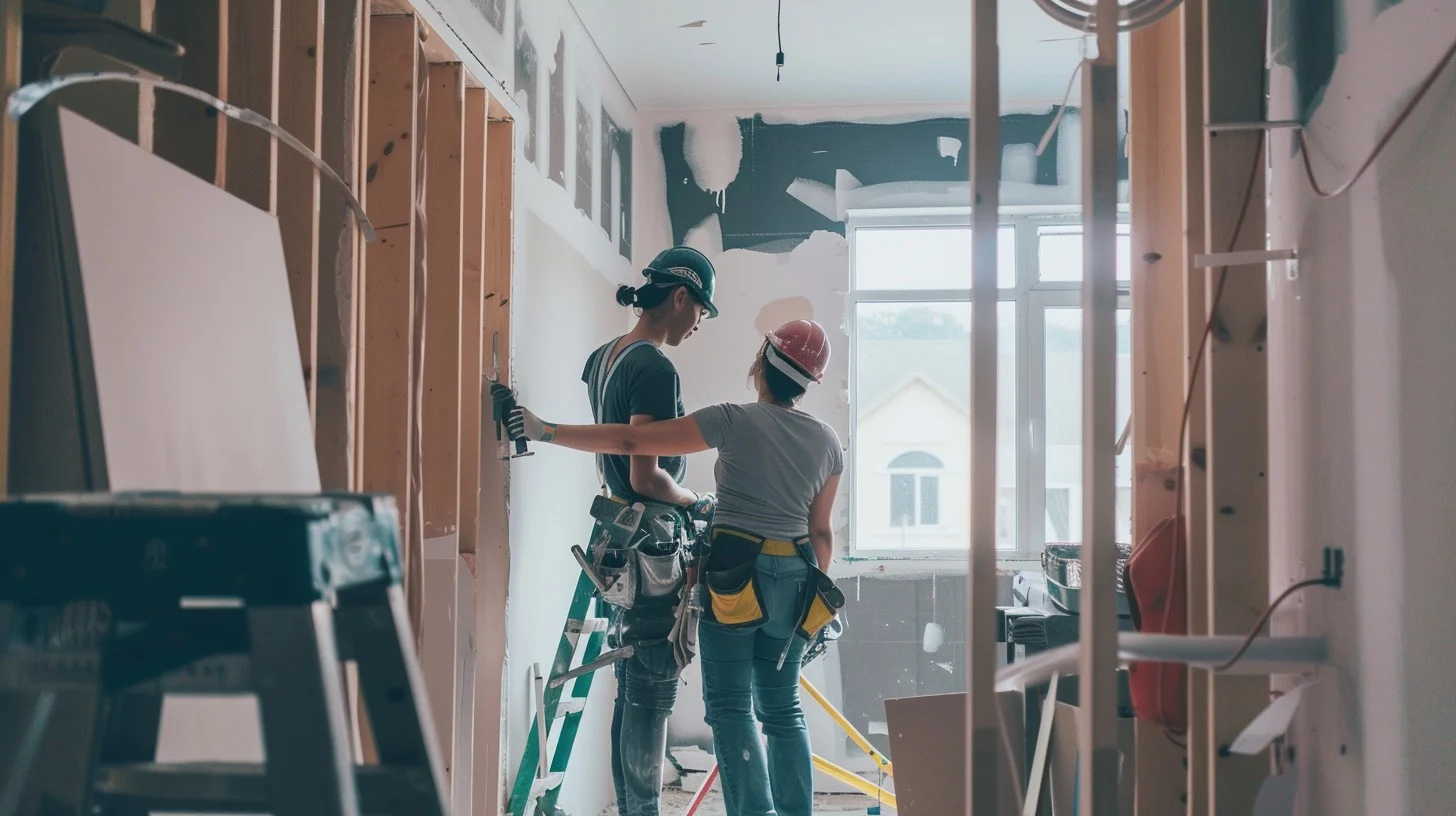
Living through a renovation: a homeowner's survival guide
Most households can live at home through a renovation, as long as the work is planned around them. The essentials are a clean, work-free zone to retreat to, a temporary kitchen or bathroom plan if those rooms are affected, proper dust control, a realistic schedule you understand before work starts, and a clear line of communication with your builder. This guide covers what to prepare, what each stage feels like from inside the house, and when it makes more sense to stay somewhere else for a few days.
Before work starts: set the house up
The week before demolition is the most useful week of the project. A few hours of preparation saves a lot of frustration later. If you are still deciding on scope, start with our step-by-step guide to planning a home renovation.
- Empty the work area completely. Cabinets, closets, shelves and anything on the walls. Pack what you will not need for the duration and label boxes by room.
- Clear a path. Trades will be moving materials between the entry and the work area. Move rugs, furniture and fragile items out of that route.
- Decide on parking and access. Agree where the bin or trailer will sit, which door the crew will use, and how they get in if you are at work.
- Make a plan for pets. Open doors, noise and new people are stressful for animals. A closed room, a sitter or daycare on the loudest days helps.
- Tell the neighbours. A short note about dates and working hours goes a long way, especially in Edmonton's older neighbourhoods where lots are close together.
Create a calm zone
Choose one room, ideally a bedroom or den far from the work, that stays renovation-free. Keep it clean, keep the door closed, and make sure it has what you need to work, sleep and decompress. Having one space that feels normal makes the rest of the house much easier to tolerate, particularly over a longer project or a whole-house renovation.
Living without a kitchen
A kitchen renovation is the hardest project to live through, because it touches every meal. A temporary kitchen makes a real difference:
- Set it up in a dining room, laundry room or basement near a sink, if possible.
- Bring over the fridge (or a spare one), a microwave, a kettle, a toaster oven or air fryer, an induction plate or slow cooker, and a small set of dishes.
- Plan simple meals and stock up before demolition. Batch-cooking and freezing a week of dinners helps.
- Use a laundry tub or bathroom sink for washing up, with a dish rack and a bin for scraps.
- In warmer months, the barbecue becomes your main cooktop.
Ask your builder how long you will be without a working sink specifically. That period is usually shorter than the whole renovation, and knowing it helps you plan.
Living without a bathroom
If you have more than one bathroom, renovate one at a time so there is always a working toilet and shower. If you have only one, ask how the work will be sequenced so the toilet is reconnected at the end of each day where possible, and plan for a few days when you may need to shower at a gym, a family member's house or a recreation centre. For larger bathroom renovations, this is worth settling before the contract is signed.
Dust, noise and air quality
Dust is the most common complaint about living through a renovation, and it is mostly preventable. Health Canada's renovation safety guidance recommends sealing off the work area and cleaning with wet cloths, mops and a HEPA vacuum where possible.
- Containment. Plastic barriers with zip doors around the work area, and covered floors along the path to the exit.
- HVAC. Return-air vents in the work area should be covered so dust does not circulate through the house. Check your furnace filter more often than usual and replace it after the dusty phases.
- Negative air. On larger projects, an exhaust fan or air scrubber can pull air out of the work area so dust does not drift into living spaces.
- Noise. Demolition and framing are the loudest stages. If you work from home, plan calls for quieter days or work elsewhere during demolition week.
If anyone in the household has asthma or another respiratory condition, mention it at the start so dust control can be planned accordingly.
What each stage feels like from inside the house
Demolition. Loud, dusty and fast. This is when hidden problems, such as old water damage or outdated wiring, are most likely to appear.
Rough-ins and inspections. Plumbing, electrical and ductwork go in. Progress can look slow because the work is inside walls, and there may be short waits for City of Edmonton inspections where permits are required.
Drywall. Visible progress, but taping and sanding produce fine dust. Containment matters most here.
Finishes. Cabinetry, tile, flooring, paint and fixtures. Quieter, but the stage with the most decisions and deliveries.
Deficiencies and handover. A walkthrough to identify small items, followed by final touch-ups and a clean.
Keep communication simple
Most renovation stress comes from not knowing what is happening. A few habits help:
- Agree on one main contact and one channel (text, email or phone) for day-to-day questions.
- Ask for a schedule that shows the major stages and when decisions or selections are due.
- Make selections before work starts wherever possible. Decisions made under time pressure on site are the ones people regret. Our interior design service can help you settle finishes early.
- Put changes in writing, including their effect on cost and schedule, before the work is done. The Government of Alberta's guide to hiring a contractor makes the same point about contracts: verbal agreements are hard to prove.
- Expect some surprises. HomeStars' renovation cost guide recommends a contingency of 10 to 15 percent of the budget, which gives you room to deal with what demolition reveals without stalling the project. Our post on what renovation TV shows leave out explains where those surprises usually come from.
At Solenne, our family-led team shares this work: operations assistant Aliya Logun coordinates trades and scheduling, and Ana Parr handles client communication, so you know who to ask and get answers quickly.
When to stay somewhere else
Living at home is not always the best choice. Consider moving out for some or all of the project if:
- It is a full home renovation affecting the kitchen, bathrooms and main living areas at once.
- The water, power or heat will be off for extended periods.
- Someone in the household is very young, elderly or has health concerns made worse by dust or noise.
- Work involves materials that need special handling, such as suspected asbestos in an older home. Health Canada notes that asbestos was commonly used in homes before 1990 and that lead paint may be present in homes built before 1991.
Even on larger projects, moving out only for the most disruptive stages can be enough. If you are planning whole-house work, our full home renovations page covers what that kind of project involves.
Frequently asked questions
Can we live in the house during a renovation?
For most kitchen, bathroom and basement development projects, yes. Whole-house renovations, or projects where water, power or heat will be off for long periods, are the main exceptions.
How do I keep dust out of the rest of the house?
Sealed plastic barriers, covered return-air vents, protected floors, frequent furnace filter changes and, on larger jobs, negative air in the work area.
How long will I be without a kitchen?
It depends on the scope and on lead times for cabinetry and counters. Ask for a schedule that shows when the sink and appliances will be out of service, and order long-lead items before demolition so that period is as short as possible.
What should I do if something unexpected is found?
Ask your builder to explain the problem, the options and the cost and schedule effect of each, in writing, before work continues.
Plan it properly from the start
A renovation is easier to live through when the plan accounts for the people living in the house. Book a consultation and we will talk through the work, the sequence and how to keep your household running while it happens. You can also see examples of our completed renovations, or read what no one tells you about home renovations before you start.