
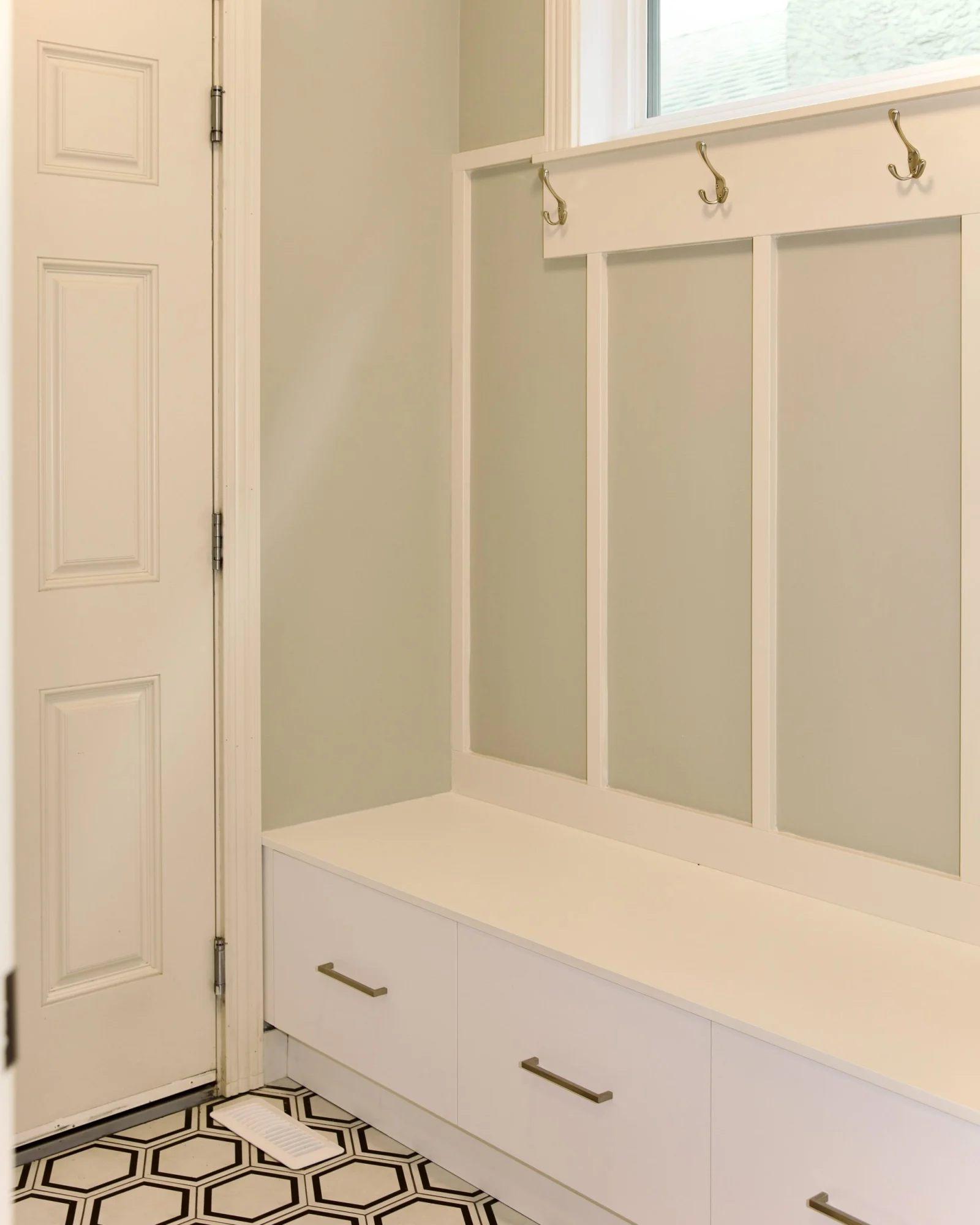
The Edmonton mudroom: built-in ideas designed for winter
A good Edmonton mudroom gives every person in the house a place to sit, a place to hang a wet coat, somewhere for boots to drip and dry, and closed storage for the gear that is not in season. Built-ins do that better than freestanding furniture because they use the full height of the wall, stand up to salt and meltwater, and keep the clutter of a long winter out of the kitchen and hallway. Below are the mudroom ideas worth considering when planning custom built-in storage for homes in Edmonton and the surrounding communities, along with what to think about before you build.
Start with how your household comes and goes
The right mudroom depends less on square footage than on traffic. Before choosing finishes, answer a few practical questions:
- Which door does everyone actually use? In many Edmonton homes it is the door from the attached garage, not the front door.
- How many people, and how much gear? A couple with two coats each needs very different storage from a family with hockey bags, ski boots and a dog.
- What arrives with you? Groceries, school bags, deliveries and work gear all need a landing spot that is not the kitchen island.
- What needs to dry? Snow pants, mitts and boots need air and somewhere for water to go.
Writing this down first is the same approach we recommend in our guide to planning a home renovation: list the problems before deciding on solutions.
Built-in ideas that earn their space
A well-planned mudroom combines some or all of the following:
- A bench at sitting height. Somewhere to sit while pulling on boots is the single most used feature. Drawers or open cubbies underneath hold shoes, hats and mitts.
- Lockers or open bays. One bay per person, with hooks at two heights so children can reach their own. Open bays let wet coats air out; doors hide the mess but need ventilation slots or a gap to let things dry.
- Sturdy hooks. Winter coats and loaded backpacks are heavy, so hooks should be fixed into solid blocking, not just drywall.
- Upper cabinets. Closed storage above the lockers holds off-season gear: summer hats and sandals in winter, toques and scarves in July.
- A boot zone. A tray, a recessed area in the floor tile or a raised rack keeps meltwater contained and off the finished floor.
- A drop zone. A small counter or shelf with a spot for keys, mail and a charging outlet stops these from landing on the kitchen counter.
Our ensuite, walk-in closet and mudroom project in Windermere shows one version of this: built-in lockers, a bench and brass coat hooks, planned alongside the other rooms of the same project so the storage and finishes work together.
Materials that handle salt, slush and grit
An Edmonton entry takes more abuse than almost any room in the house. Between November and April, it sees road salt, gravel, sand and repeated meltwater. Choose surfaces for that reality:
- Flooring: porcelain tile is the most durable choice and cleans easily. Luxury vinyl plank is warmer and quieter underfoot and resists water well, though grit can scratch it over time. Avoid solid hardwood at the door.
- Grout: a darker or mid-tone grout hides salt staining better than white.
- Bench tops and lower panels: painted finishes chip where boots and bags hit them. A durable factory finish, a solid surface or a wood top with a hard-wearing sealer lasts longer.
- Wall protection: a wainscot, beadboard or tile on the lower part of the wall takes the knocks that would otherwise mark drywall.
Water is the main enemy. Natural Resources Canada's Keeping the Heat In guide puts it plainly: water, in all its states, is the major cause of damage to a building. In a mudroom, that means sealing the floor properly, keeping wet gear off wood surfaces and making sure the room is not left damp.
Warmth, drying and air sealing
A cold, drafty mudroom is a common complaint, especially where the room sits over a garage or against an exterior wall. A few things help:
- Seal the door. The same NRCan guide notes that uncontrolled air leakage through the building envelope can be the major source of heat loss in a home. Good weatherstripping and a properly fitted door and threshold make a noticeable difference at a busy entry.
- Heated floors. Electric in-floor heat under tile keeps the floor comfortable and helps boots and mats dry. It needs its own circuit and a thermostat.
- Boot and glove dryers. Plan outlets where you will actually use them, at the bench or inside a locker, rather than relying on extension cords.
- Ventilation. If the mudroom doubles as a laundry or has wet gear drying in closed cabinets, an exhaust fan helps move moisture out.
Any new circuits for heated floors, dryers or outlets need a permit and a qualified electrician. The City of Edmonton's electrical permit page states that adding new circuits or wiring for receptacles or lighting requires a permit.
Combining the mudroom with laundry, pets or a garage entry
In newer homes in Edmonton and in communities like St. Albert and Sherwood Park, the mudroom is often the hallway between the garage and the kitchen, and sometimes it shares space with laundry. A few combinations work well:
- Mudroom and laundry: wet gear can go straight into the washer, and a utility sink handles muddy items. Keep the laundry appliances out of the main walking path.
- Pet station: a low shower or wash basin for a dog, with a tiled surround, saves the bathtub. This adds plumbing, which generally needs a permit.
- Garage entry: where the garage door opens into a narrow hall, a shallow bank of lockers on one wall can still give every person a bay.
- Basement or side entry: in older homes with a side door to the basement landing, the landing itself can take a bench and hooks. If you are already planning basement development, it is a good moment to add one.
Small mudroom ideas
Not every home has a separate room. Some of the most useful mudrooms are a single wall:
- A built-in bench with hooks above and a shelf at the top, fitted to the wall beside the door.
- A converted front hall closet with the doors removed, a bench added and hooks replacing the hanging rod.
- Shallow cabinets under the stairs for shoes and bags.
A small built-in like this is often part of a wider refresh. Our post on small renovation upgrades that make a big impact covers other changes that suit a modest budget.
Planning a mudroom as part of a larger project
A mudroom often makes most sense when it is planned with the rooms around it. If you are reworking the kitchen, adding an addition or renovating the main floor as part of a full home renovation, the entry can be rethought at the same time, including moving a door, borrowing space from a closet or relocating laundry. If you are building a custom home, the mudroom can be sized and placed from the start. Our interior design support helps settle the layout, finishes and storage details before anything is built, so the cabinetry, tile and lighting are chosen together.
It also helps to think ahead. Our article on renovation ideas that age well covers designing for ageing in place and building in what is hard to add later, both worth considering at the entry.
Do you need a permit for a mudroom?
It depends on the scope. The City of Edmonton's renovation guidance lists work such as replacing flooring, painting and installing kitchen cabinets as not needing a building permit, while structural changes and adding or resizing a window or exterior door do. A built-in bench and lockers on an existing wall is usually cosmetic work. Moving walls, changing a door opening, adding plumbing or adding circuits is not. We confirm what your project needs and include the permits in the plan.
Frequently asked questions
What should a mudroom include?
At minimum, somewhere to sit, hooks or lockers for each person, a place for wet boots and closed storage for off-season gear. A drop zone for keys and mail and durable flooring make it work much better through an Edmonton winter.
What is the most durable mudroom flooring?
Porcelain tile is the most durable and easiest to clean of salt and grit. Luxury vinyl plank is a good alternative where you want something warmer and quieter underfoot. Solid hardwood is not well suited to a winter entry.
Should mudroom lockers have doors?
Open lockers let wet coats and boots dry and are easier to use every day. Doors hide clutter but need ventilation so damp gear does not stay wet. Many households choose open lower bays and closed upper cabinets.
Can a mudroom fit in a small entry?
Yes. A single wall with a bench, hooks and a shelf, or a converted hall closet, can give a small home most of the function of a full mudroom.
Plan an entry that works all winter
Solenne is a family-led renovation and custom build company in west Edmonton, and our founder and lead builder, Courtney Parr, has more than 20 years of construction experience with a focus on custom carpentry. You can see more of our work on our projects page. If your entry is not keeping up with the season, book a consultation and we will look at the space with you and prepare a detailed quote.